
Connect the tools and steps that slow growth down.
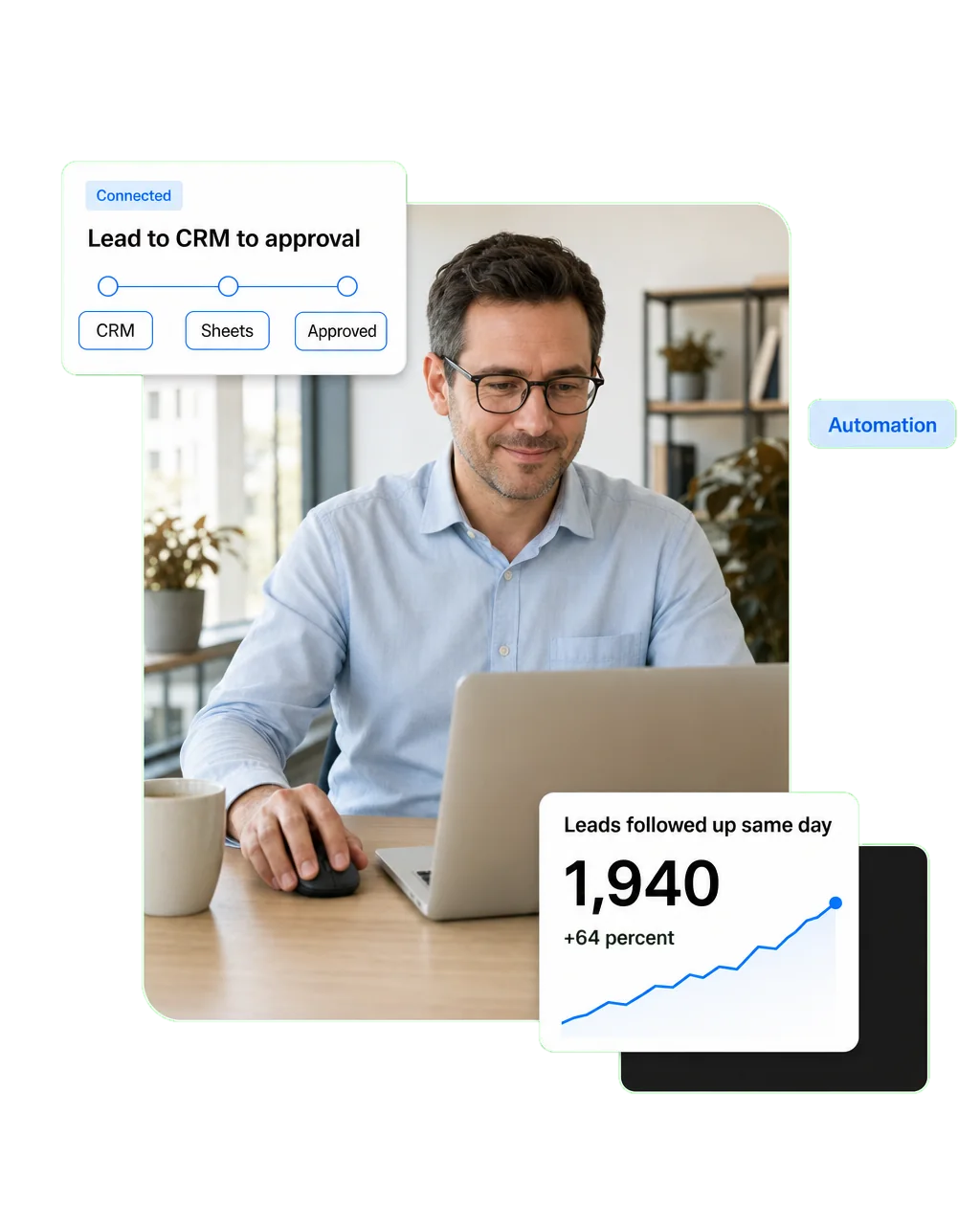
One system connecting tools, data, and approvals that used to break.
Relevant
Growth, intelligently executed.
Stop losing hours to handoffs no one owns.
When tools, data, and approvals live in separate systems, someone on your team becomes the connection between them, doing by hand what a system could do faster and more consistently.
Talk to usFewer manual handoffs between tools
Data, tasks, and approvals move between systems automatically wherever judgment isn't required, cutting delay out of the process.
One connected operating flow
Reporting, campaign operations, and quality checks run through a defined workflow instead of depending on individual memory.
Judgment stays where it belongs
Human review remains in the process at every point where compliance, quality, or accountability requires a person to decide.
Automate the handoffs behind the work.
The same sequence governs every engagement. Scope follows the tools, data, and approval steps involved in the workflow.
Analysis
Map how work currently moves across people, platforms, and approval points, and where it breaks down.
Strategy
Decide what should be automated, what stays manual, and where human review has to remain in the process.
Implementation
Build the integrations and automated steps connecting the tools, data, and systems in scope.
Optimization and reporting
Monitor the workflow, fix what breaks, and report the time and effort the automation is actually saving.
The components of a connected operating flow.
Each component can stand alone or run as part of a full workflow rebuild. Your team keeps final approval authority throughout.
Workflow mapping
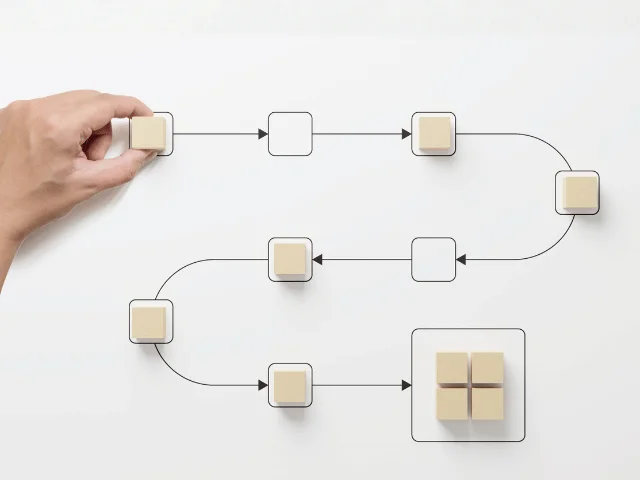
Map how work currently moves across people, platforms, and approvals, and identify where it breaks down.

Integrations and data flows
Connect platforms, data sources, and tools so information moves without manual export and re-entry.

Automated tasks and approvals
Automate repeatable steps, reporting, and task creation while keeping human review wherever judgment is required.

Monitoring and maintenance
Monitor the workflow for breaks or drift and maintain the integrations as tools and processes change.
For teams losing time to manual handoffs.
- A process worth the build. The workflow is repeatable and valuable enough that removing manual steps creates a real return.
- Work spread across too many systems. Work moves across multiple tools, teams, or approval points, with no one system in charge of the whole flow.
- Someone who draws the line. An internal owner defines what should stay manual and approves the automation before it goes live.
The systems inside a typical integration.
CRM and lifecycle platforms
Customer and lead data kept in sync with the systems that act on it.
Ad and media platforms
Campaign data and budgets connected to reporting without manual export.
Data warehouses and BI tools
Performance data flowing into the reporting layer your team already uses.
Project and approval systems
Tasks and approvals routed automatically to the person who owns the decision.
What to know before we start.
Scope depends on the tools, data, and approval steps already in place.
Ask about your accountWhat does brlvnt manage within workflow automation and integrations?+−
Scope can include workflow mapping, integration builds, automated tasks and approvals, and ongoing monitoring. Final scope reflects the systems and processes involved.
Can brlvnt work with the tools we already use?+−
Yes. We connect and automate within your existing stack wherever possible, and recommend new tools only when the current stack can't support the workflow.
What stays manual after an automation project?+−
Anything that requires judgment, compliance review, or accountability stays with a person. We define that boundary before building anything.
Can this scale across multiple teams or business units?+−
Yes. Workflows are mapped and built to account for how different teams use the same systems, not just one team's process.
What happens when a tool or process changes later?+−
Integrations are monitored and maintained, so a platform update or process change doesn't quietly break the workflow.
How does AI change workflow automation?+−
AI can extend automation into judgment-adjacent tasks, like drafting or summarizing, faster than rules-based automation alone. Human review still governs anything with real consequences.
Connected by design.
Bring us the handoff that keeps breaking.
Share the tools, the process, and where it currently depends on someone remembering a manual step. We'll identify what can be connected.